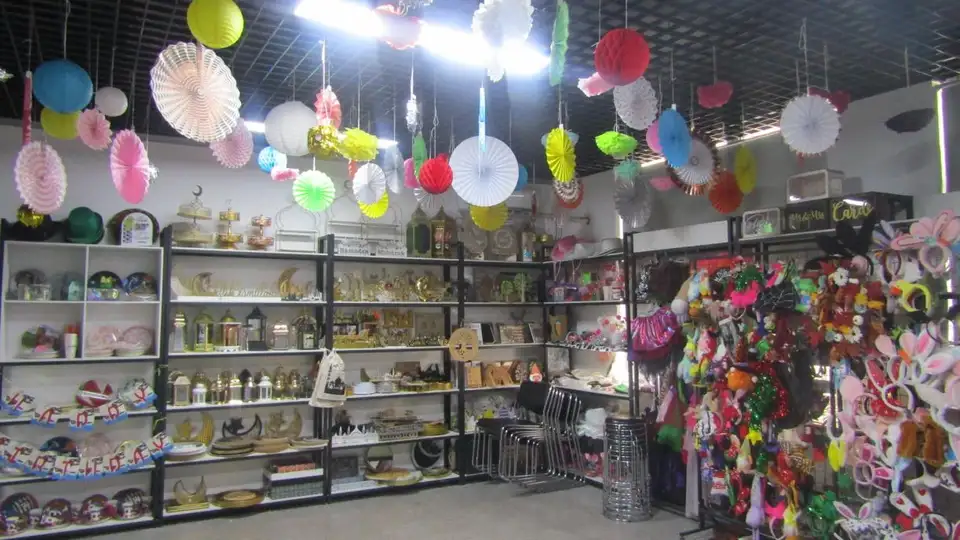
The global market for Ramadan decorations has expanded far beyond traditional lanterns and crescents. In 2026, importers in the USA, Middle East, and Indonesia are looking for innovative, sustainable, and culturally accurate products that can capture the festive spirit while delivering strong margins. As a factory with over a decade of experience in producing all party items , we have witnessed the evolution of this niche and the common pitfalls that buyers face. This guide provides a step-by-step roadmap to sourcing ramadan home decorations directly from China, avoiding costly mistakes and capitalizing on the latest trends.
Why Source Ramadan Decorations from China in 2026?
The decision to source from China is not just about price—it’s about accessing a complete ecosystem of design, manufacturing, and logistics that few other countries can match. In 2026, several factors make China the go-to origin for Ramadan decor.
The Global Surge in Ramadan Celebrations and Decor Demand
Ramadan is no longer a modest, private observance in many parts of the world. In the USA, the number of Muslims is projected to reach 4.5 million by 2026, and mainstream retailers like Target and Party City have started stocking dedicated Ramadan aisles. The Middle East remains the largest market, with Saudi Arabia and the UAE leading in per-capita spending on festive decorations. Indonesia, as the world’s most populous Muslim nation, drives massive volume demand for affordable yet vibrant decor. According to industry estimates, the global Ramadan decorations market will exceed $2.8 billion in 2026, with an annual growth rate of 9% since 2023.
This surge is fueled by social media, where elaborate home setups and community events are widely shared. Importers who can supply unique, high-quality items on time can capture a significant share of this growing pie. However, the window of opportunity is narrow—orders must be placed months in advance to meet the pre-Ramadan shipping deadlines.
China’s Unmatched Production Capacity for Festival Supplies
China produces over 70% of the world’s party and festival supplies, a dominance built on decades of specialization. Clusters in Yiwu, Zhejiang, and Shantou, Guangdong, house thousands of factories that can pivot from Christmas to Ramadan production with minimal downtime. Our own factory, located in Yiwu, can scale from 5,000 to 50,000 units per week during peak season without compromising quality.
This capacity is backed by an integrated supply chain: raw materials like LED chips, fabrics, and metals are sourced locally, reducing lead times and costs. For buyers, this means you can order a container of customized lanterns in September and have them delivered to your warehouse in Chicago or Jakarta by early January, well before Ramadan 2026 (expected to start February 18). Few other manufacturing hubs can offer this combination of speed and volume.
How Chinese Manufacturers are Leading in Sustainable and Innovative Decor
Gone are the days when “Made in China” meant cheap, disposable products. In 2026, environmental regulations and consumer demand have pushed Chinese factories to adopt eco-friendly practices. Many now offer decorations made from recycled PET fabric, biodegradable paper, and solar-powered LED lights. Our factory recently launched a line of reusable fabric banners that can be folded and stored for multiple years, reducing landfill waste.
Innovation is another strong suit. Smart decorations controlled via mobile apps are gaining traction. Imagine a string of LED lights that can change colors and patterns to sync with the call to prayer or display “Ramadan Kareem” in scrolling text. Chinese manufacturers are at the forefront of integrating IoT technology into festive decor, a trend that will only accelerate in 2027 and beyond.
Regional Market Insights: USA, Middle East, and Indonesia Preferences
Understanding regional preferences is critical to stocking the right inventory. In the USA, consumers favor modern, minimalist designs that blend with contemporary home aesthetics. DIY decoration kits and educational items for children are top sellers. The Middle East market, by contrast, values luxury and tradition—handcrafted metal lanterns, ornate calligraphy, and rich fabrics command premium prices. In Indonesia, price sensitivity is high, so lightweight, colorful plastic or paper decorations in bulk packs dominate the market. A successful importer tailors their product mix to these distinct tastes rather than adopting a one-size-fits-all approach.
How to Identify a Reliable Ramadan Decorations Manufacturer in China?
Finding a genuine manufacturer among the sea of online listings can be daunting. Over the years, I’ve developed a systematic approach that has saved my clients thousands of dollars and countless headaches. Here are the five steps I recommend to every new buyer.
Step 1: Verify Business Licenses and Export Certifications
Always start with a document check. Request the factory’s business license, which shows its registration number, legal representative, and business scope. A real manufacturer will have “manufacturing” listed in its scope, while a trading company will show “wholesale” or “import/export.” Next, ask for export-related certifications such as ISO9001 (quality management), BSCI (social compliance), or CE/RoHS for electronic items. In one instance, a supplier provided a license that, upon verification, belonged to a different entity—a clear sign of a middleman. Taking these extra minutes can prevent a disastrous partnership.
Step 2: Conduct Virtual or On-Site Factory Audits
Post-pandemic, video audits have become the norm and are incredibly effective. Use a live video call to walk through the production floor, raw material warehouse, and quality control area. Pay attention to the machinery, worker density, and organization. I recall a client who was about to place a $30,000 order based on glossy photos, but a 20-minute video tour revealed that the “factory” was a cramped workshop with outdated equipment. The client switched to our factory and received consistent quality. If your order exceeds $50,000, consider hiring a local sourcing agent for an on-site visit—the $500 fee is a worthwhile insurance policy.
Step 3: Request and Evaluate Product Samples Thoroughly
Samples tell the true story. Ask for two types: a pre-production sample that reflects the exact materials and workmanship, and a mass production sample randomly pulled from a recent batch. Compare them side by side under good lighting. Check for color consistency, print clarity, and assembly sturdiness. In 2025, we had a situation where a buyer approved a gold-plated sample, but the bulk order arrived with a thinner coating that tarnished within weeks. The issue was caught only because we insisted on a mass production sample. Always document sample quality with photos and notes to attach to your contract.
Step 4: Check References and Past Client Reviews
Don’t rely solely on B2B platform reviews; many can be fabricated. Ask the supplier for contact information of three past clients, preferably from your region. A brief call or email can reveal delivery reliability, communication ease, and how the supplier handled problems. You can also search the company name on forums or LinkedIn to see if any complaints surface. A trustworthy manufacturer will be transparent about its track record.
Step 5: Negotiate Clear Contracts with Quality and Timeline Clauses
A handshake means little in international trade. Your contract must specify material grades, dimensions, color codes (Pantone), and acceptable defect rates (usually under 2%). Crucially, include a delivery deadline tied to Ramadan—for 2026, goods should leave China by early January to account for sea freight and customs. Add penalty clauses for late shipment, such as a 5% discount per week of delay. I always advise buyers to use a bilingual contract (English and Chinese) to avoid translation disputes. A well-drafted contract aligns expectations and gives you legal recourse if things go wrong.
What Are the Common Mistakes When Choosing a Ramadan Decorations Supplier?
Even experienced importers stumble on these pitfalls. Learn from the mistakes I’ve witnessed firsthand to keep your business on track.
Mistake 1: Falling for Too-Good-To-Be-True Low Prices
Everyone loves a bargain, but in manufacturing, price and quality move together. If a quote is 30-40% below the market average, the supplier is likely cutting corners—using recycled plastics with harmful chemicals, thinner wires, or unlicensed LEDs. I once saw a shipment of 10,000 LED crescent lights priced at $0.25 each get seized at a US port because they lacked FCC certification. The buyer lost the entire investment and faced a fine. Always benchmark prices across at least five suppliers and be suspicious of outliers.
Mistake 2: Ignoring Cultural and Religious Design Sensitivities
Ramadan decorations carry deep religious significance. A design that looks beautiful to a non-Muslim designer might be offensive or incorrect. Common errors include using inappropriate imagery (like human figures in religious contexts), misspelled Arabic text, or colors that clash with local customs. In one case, a US importer ordered banners with an Islamic phrase written left-to-right instead of right-to-left, rendering it meaningless. The entire batch was unsellable. Always engage a cultural consultant or a native speaker to review your designs before production. This small step protects your brand reputation.
Mistake 3: Overlooking Logistics and Ramadan-Specific Deadlines
Ramadan shifts by about 10 days each year on the Gregorian calendar. In 2026, it is projected to begin on February 18, meaning the peak buying season starts in early January. If your goods arrive in late February, you’ve missed the sales window. Factor in 30-40 days for ocean freight (China to USA/Middle East) and 7-10 days for customs clearance and inland delivery. That means your order should be ready for shipment by mid-December 2025. Many buyers underestimate these timelines and end up with a warehouse full of decorations they can’t move until next year. Use a logistics planner and build in a two-week buffer.
Mistake 4: Not Protecting Your Intellectual Property and Designs
If you have a unique lantern shape or a proprietary printing technique, protect it before sharing with factories. China has a robust IP registration system, but it must be done proactively. I’ve seen a buyer’s exclusive design appear on Alibaba within weeks because they sent drawings without an NDA. At a minimum, sign a non-disclosure agreement and a mold ownership agreement if custom tooling is involved. For high-value designs, register a design patent in China—it costs around $500 and gives you legal standing.
Mistake 5: Confusing Trading Companies with Actual Manufacturers
Trading companies act as intermediaries, marking up prices by 10-25% and often having less control over production quality. They can be useful for small orders or complex multi-product sourcing, but for consistent quality and direct communication, a factory is preferable. How to tell the difference? Ask for a video of the production line, check the business license scope, and inquire about raw material sourcing. A real factory will know the details of their injection molding machines or fabric cutting processes. If the salesperson hesitates, you’re likely talking to a trader.
Which Ramadan Decorations Offer the Best Value for Importers?
Selecting the right product mix can determine your profit margin. Here’s a breakdown of the most popular categories and what to consider for each.
LED Lights vs. Traditional Lanterns: Pros, Cons, and Costs
Both categories have their place, but your market should guide your investment. The table below summarizes the key differences based on our factory’s 2026 pricing and client feedback.
| Feature | LED String Lights | Traditional Metal/Glass Lanterns |
|---|---|---|
| FOB Cost per Unit | $0.80 – $2.50 | $3.00 – $12.00 |
| Energy Efficiency | High (low-wattage LEDs) | Varies (electric bulbs or candles) |
| Durability | Moderate (1–2 seasons) | High (5+ years with care) |
| Customization Ease | Easy (colors, length, patterns) | Moderate (engraving, size, finish) |
| Cultural Authenticity | Modern, contemporary feel | Classic, heritage-rich appeal |
| Shipping Weight (per 100 pcs) | 2–5 kg | 15–30 kg |
| Best Market Fit | USA, Indonesia (price-sensitive, modern) | Middle East, premium global retailers |
For importers targeting the USA and Indonesia, LED lights offer higher turnover and lower shipping costs. Middle East buyers should stock traditional lanterns for their cultural resonance and higher perceived value, despite the heavier logistics.
Fabric vs. Plastic vs. Paper Decorations: Durability and Eco-Friendliness
Material choice impacts both sustainability credentials and longevity. Fabric decorations, especially those made from recycled polyester, are tear-resistant and can be reused for years. They cost more upfront ($1.50–$5.00 per banner) but appeal to eco-conscious consumers. Plastic decorations (PVC, PE) are cheap and vibrant but have a shorter lifespan and face increasing regulatory scrutiny in Western markets. Paper decorations are lightweight and biodegradable, ideal for one-time events or DIY kits, but they lack durability. In 2026, we recommend a mix: fabric for high-end lines, paper for budget-friendly bulk packs, and plastic only if it’s recyclable.
Customized vs. Stock Decorations: Which Sells Better in Your Market?
Customization allows you to differentiate, but it comes with higher MOQs and longer lead times. In the USA, customized items like family name banners or personalized advent calendars can command a 40–60% retail premium. The Middle East prefers stock designs with authentic calligraphy and geometric patterns, as these are trusted and instantly recognizable. Indonesia’s market leans heavily toward stock products due to price sensitivity, though personalized items are emerging in urban centers. Analyze your sales channels: if you sell on Etsy or Amazon Handmade, customization is a must; for wholesale to brick-and-mortar stores, stock might be safer.
Top 5 Best-Selling Ramadan Decoration Items in 2026 from Our Factory
Based on our order data and client feedback, these five items are moving fastest this year:
- LED Crescent Moon String Lights (10m, warm white): Versatile, energy-efficient, and perfect for both indoor and outdoor use.
- Reusable Fabric Wall Banners with “Ramadan Kareem” Calligraphy: Eco-friendly and available in multiple sizes.
- DIY Paper Lantern Kits for Kids: Educational and engaging, a hit in the USA and UK markets.
- Smart Projection Lamps with App Control: High-tech decor that projects patterns and messages on walls.
- Ramadan Countdown Calendar with Treat Pockets: Combines tradition with a modern advent-calendar concept.
How Much Does It Cost to Import Ramadan Decorations from China?
Understanding the full cost picture is essential for pricing your products competitively. I’ll walk you through a real example from a recent client order to the USA.
Manufacturing Cost Breakdown by Material and Complexity
A typical LED crescent light (10m string, 30 LEDs) breaks down as follows: LED chips and wire ($0.40), plastic crescent covers ($0.15), packaging ($0.10), labor ($0.20), and factory overhead plus profit ($0.25). The total FOB price is around $1.10 per unit. More complex items, like a metal lantern with cut-out patterns, can have material costs of $2.50, labor $1.50, and packaging $0.50, leading to an FOB of $5.00–$8.00. The key takeaway: labor-intensive products scale less efficiently, so order larger quantities to reduce per-unit labor costs.
Shipping, Customs, and Total Landed Cost Calculation
Let’s calculate the landed cost for 20,000 LED string lights shipped from Ningbo to Los Angeles. FOB total: 20,000 × $1.10 = $22,000. Ocean freight for a 20ft container (sharing space) costs approximately $2,800. Marine insurance at 0.3% adds $66. US customs duty for festive articles is 3.5% on the FOB value, so $770. Customs bond and broker fees run about $400. Inland trucking to a Chicago warehouse adds $600. Total landed cost: $22,000 + $2,800 + $66 + $770 + $400 + $600 = $26,636. That’s $1.33 per unit, a 21% increase over FOB. Always use a detailed landed cost calculator before setting your retail price.
Profit Margin Scenarios for Different Business Models
Using the $1.33 landed cost, here’s how margins play out. A wholesaler selling to retailers at $2.50 per unit earns a 47% margin. A retailer selling direct to consumers at $5.99 enjoys a 78% margin. For dropshippers, the supplier’s price might be $3.00 including shipping, leaving a 50% margin if you retail at $5.99. However, dropshipping works best for lightweight items where shipping costs don’t erode profits. In my experience, wholesaling yields the most stable income, while retail and dropshipping offer higher margins but require more marketing effort.
How to Use Bulk Orders and Seasonal Contracts to Maximize ROI
Placing a single large order instead of multiple small ones reduces per-unit freight and gives you leverage to negotiate a 5–10% discount. For seasonal items like Ramadan decor, consider a “seasonal contract” where you commit to a total volume over two years, locking in prices and production slots. I helped a client secure a 12% cost reduction by signing a two-year contract for 100,000 units annually. This also smoothed their cash flow and ensured on-time delivery every year. Plan your orders by August 2025 for Ramadan 2026 to take advantage of off-peak factory pricing.
What Tools and Resources Help You Find a Reliable Ramadan Decorations Manufacturer?
The right tools can transform a chaotic sourcing process into a streamlined operation. Here are the resources I recommend to my clients.
Top B2B Platforms: Alibaba, Made-in-China, Global Sources Compared
Alibaba remains the largest, with millions of suppliers, but it’s also crowded with trading companies. Use filters like “Verified Supplier” and “Trade Assurance” and always check the company profile for “manufacturer” status. Made-in-China has a smaller but more vetted pool, often with better factory-direct listings. Global Sources focuses on electronics and gifts, making it ideal for LED decor. Each platform has its strengths: Alibaba for variety, Made-in-China for industrial products, and Global Sources for innovation. Cross-reference suppliers across platforms to verify consistency.
The Role of Sourcing Agents and When to Use One
A sourcing agent based in Yiwu or Guangzhou can handle supplier identification, negotiation, quality control, and logistics for a fee of 5–10% of the order value. This is particularly useful if you’re new to importing or if your order exceeds $50,000. Agents have local knowledge and can visit factories unannounced. However, for smaller orders, the fee might outweigh the benefits. I advise using an agent for your first two orders to learn the ropes, then transitioning to direct relationships once you’ve built confidence.
Quality Control Services: How to Arrange Pre-Shipment Inspections
Third-party QC companies like SGS, Bureau Veritas, or AsiaInspection offer pre-shipment inspection services starting at $300 per day. They check random samples from your batch for defects, safety compliance, and packing. Schedule the inspection when at least 80% of your order is produced and packed. The inspector will issue a detailed report with photos. This is your last line of defense before goods leave China. I’ve seen inspections catch issues like wrong voltage adapters or missing safety labels that would have caused costly returns.
Free Download: 10-Point Supplier Evaluation Checklist for Ramadan Decor
To help you vet suppliers systematically, we’ve created a concise checklist covering license verification, sample evaluation, contract essentials, and more. You can request a free copy by contacting our team through our website. This checklist has been used by over 200 importers and has consistently helped them avoid the common mistakes outlined in this article.
What Are the Latest Trends in Ramadan Decorations for 2026?
Staying ahead of trends ensures your product line remains relevant and desirable. Here’s what’s shaping the market this year.
The Rise of Eco-Friendly and Reusable Ramadan Decor
Sustainability is no longer a niche concern. In 2026, a significant portion of consumers in the USA and Middle East actively seek out decorations made from recycled or biodegradable materials. Our factory’s new line of reusable fabric table runners and solar-powered garden lights has seen a 200% increase in orders compared to 2025. Buyers should highlight eco-certifications like GRS (Global Recycled Standard) in their marketing to capture this growing segment.
Smart Decor: App-Controlled LED and Projection Mapping
Technology integration is transforming home decoration. App-controlled LED strips that can synchronize with music or display animated Ramadan greetings are now affordable for mass market. Projection mapping devices that cast moving patterns onto walls or ceilings are becoming popular for community iftars and home gatherings. Our R&D team recently developed a compact projector that can display a rotating crescent moon and stars, retailing under $30—a price point accessible to middle-class families in Indonesia and the USA.
How Global Design Trends are Influencing Traditional Ramadan Motifs
Minimalist Scandinavian design, bold geometrics, and pastel color palettes are blending with traditional Islamic art. Younger consumers in the Middle East are embracing lanterns in muted gold and white instead of bright brass. In the USA, decorations that double as everyday home accents (like neutral-toned string lights) are preferred. This fusion creates opportunities for designers to innovate while respecting cultural roots. Collaborate with your factory’s design team to create exclusive patterns that bridge these worlds.
Preparing for the Future: What Buyers Should Expect in 2027 and Beyond
Looking ahead, augmented reality (AR) decorations that interact with smartphones will enter the market. Imagine pointing your phone at a plain wall and seeing a virtual lantern display. Personalization will also deepen, with on-demand printing allowing consumers to order decorations with their family names or specific messages. As a buyer, building a flexible supply chain now will position you to adopt these innovations quickly. The factories that invest in digital printing and smart electronics today will be the leaders of tomorrow.
Your success in the 2026 Ramadan season depends on the decisions you make today. By partnering with a reliable Chinese manufacturer, you can secure high-quality ramadan home decorations that resonate with your target market—whether it’s modern LED lights for the USA, traditional lanterns for the Middle East, or affordable bulk packs for Indonesia. As a factory that produces all party items , we understand the nuances of festive sourcing and are committed to helping our clients avoid the pitfalls detailed in this guide. Reach out to our team to discuss your custom requirements, request a sample kit, or download our free 10-Point Supplier Evaluation Checklist. Let’s make Ramadan 2026 your most profitable season yet.
Sources and Further Reading: